TL;DR
- China launched the uncrewed Shenzhou 22 as an emergency lifeboat for three astronauts stranded aboard the Tiangong station.
- The Long March 2F-launched vessel completed automated docking with Tiangong about three-and-a-half hours later, at roughly 250 miles (400 km) up.
- The mission was pulled forward from a planned crewed flight next year to address an urgent orbital safety need.
- The crew lost their previous ride home due to spacecraft issues; Shenzhou 22 now gives them a verified return path, per Ars Technica.
- CMSA kept a Long March 2F and Shenzhou stack on standby, a ready-to-launch backup approach it says models efficient emergency response.
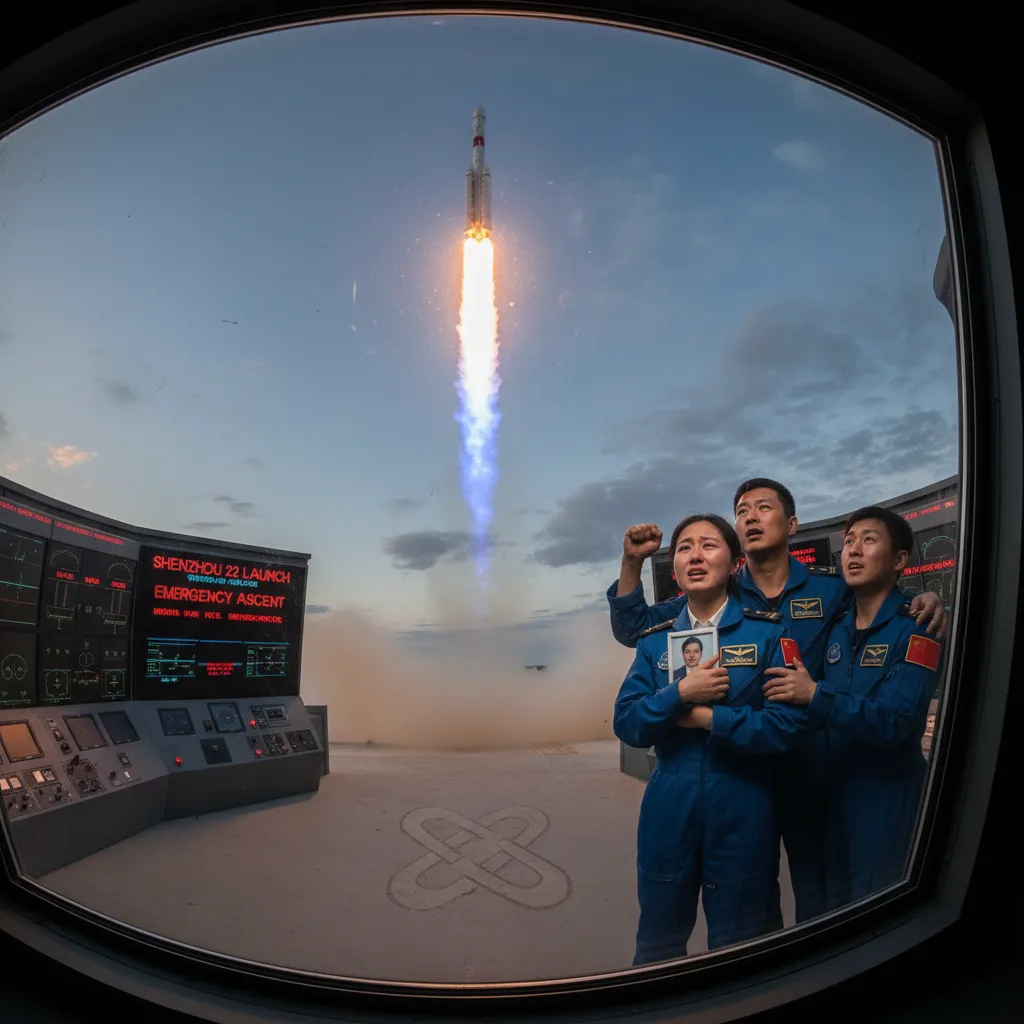
China’s space response capabilities just hit a major milestone with the emergency launch of the Shenzhou 22 spacecraft. In a rapid operational shift, the China Manned Space Agency (CMSA) launched the unpiloted vessel late Monday to serve as a lifeboat for three astronauts currently stranded aboard the Tiangong space station.
Rapid Action: Shenzhou 22 Emergency Launch
The mission profile for Shenzhou 22 was dramatically altered from its original schedule. Initially set to fly next year with a crew, Chinese engineers accelerated the timeline to address an urgent safety need in orbit. The spacecraft launched atop a Long March 2F rocket and completed an automated docking procedure with the Tiangong space station just three-and-a-half hours later. This swift maneuvering placed the vehicle approximately 250 miles (400 kilometers) above Earth, securing a return vehicle for the crew.
This operation highlights a critical evolution in emergency space missions. Historically, launch schedules are rigid, planned months or years in advance. The ability to pull a launch forward by months demonstrates a flexible supply chain and high-readiness ground operations. According to the CMSA, this rapid turnaround provides a “successful example for efficient emergency response in the international space industry,” signaling that China’s infrastructure can handle on-demand logistics—a capability essential for maintaining a permanent human presence in orbit.
Technological Agility in Human Spaceflight
The technical success of this mission relies heavily on the automation capabilities of the Shenzhou platform. Docking a spacecraft without a pilot onboard requires sophisticated guidance, navigation, and control systems, particularly when the target is a staffed station like Tiangong. While automated docking is standard for cargo vessels like the Tianzhou, executing it with a human-rated vehicle under emergency constraints validates the robustness of China’s human spaceflight hardware.
Safety protocols for long-duration missions are being rewritten by these developments. The “lifeboat” concept—having a dedicated vessel attached to the station for emergency evacuation—is standard practice. However, the ability to deploy a replacement lifeboat from the ground on short notice drastically reduces the risk profile for astronauts. As reported by Ars Technica, this mission ensures the three astronauts, who were left without a safe ride home due to issues with their previous craft, now have a viable return path. This redundancy is the technological backbone required for future space exploration, where help from Earth cannot always be guaranteed immediately.
Implications for the International Space Race
China’s demonstration of rapid launch capability shifts the dynamics of the international space race. Reliability and resilience are now just as valuable as lift capacity. By successfully executing this rescue, China signals to international partners and competitors that its space program is not just expanding, but is also highly adaptable to crises. This contrasts with recent struggles faced by other major space powers regarding vehicle reliability and rescue timelines.
The geopolitical implications extend to potential international collaborations. Nations looking for partners in space exploration prioritize safety and logistical reliability. China’s proven ability to solve a “stranded astronaut” scenario quickly makes the Tiangong station a more attractive platform for international science experiments and astronaut exchanges. As the CMSA continues to refine these operations, the gap between traditional space powers and China’s capabilities continues to narrow, placing pressure on other agencies to demonstrate similar rapid-response competencies.
Future Outlook: Normalized Rescue Operations
Looking ahead, this mission sets a precedent for how agencies handle orbital anomalies. We are moving toward an era where “space rescue” transitions from a sci-fi concept to a standard operational contingency. The success of Shenzhou 22 suggests that maintaining a “ready-to-launch” backup rocket—a strategy China has employed by keeping a Long March 2F and Shenzhou stack on standby—may become an industry standard for all permanent space stations.
For the three astronauts currently aboard Tiangong, the immediate future is now secure. They have a verified ride home. For the broader industry, the focus shifts to replicating this speed. As orbit becomes more crowded and commercial stations launch, the demand for on-call emergency vehicles will grow. China has effectively proven that rapid response is possible, raising the bar for safety standards in low Earth orbit.