TL;DR
- Zhejiang University and University of Cambridge researchers built perovskite nano-LEDs measuring 90 nanometers wide, roughly the size of a flu particle.
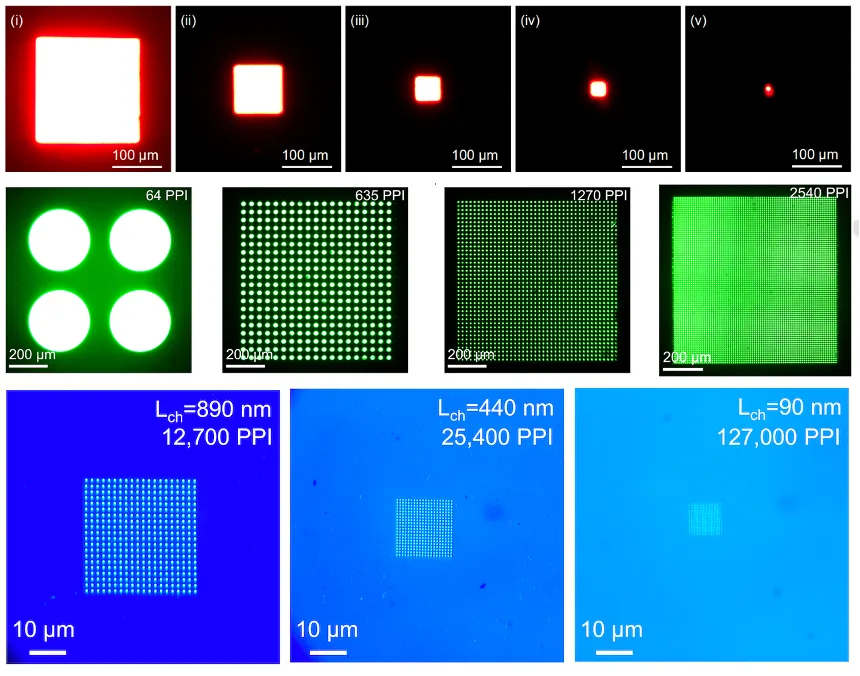
- The nano-PeLEDs hit 127,000 pixels per inch (240x an iPhone screen) while keeping 100% brightness at that scale.
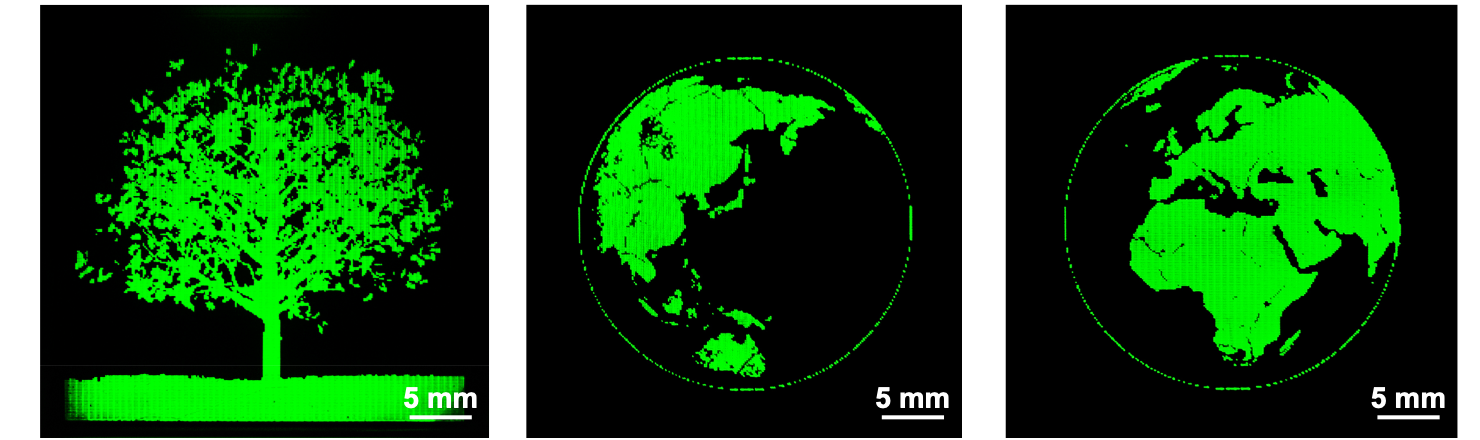
- With Hangzhou’s LinkZill, the team demoed a working active-matrix micro-PeLED display showing video clips.
- Main limitation: current prototypes only emit blue light, and matching red and green perovskite LEDs remains unsolved.
- Perovskite costs less than gallium nitride and skips sapphire substrates, targeting AR glasses, holography, and photolithography.
When “Smaller” Doesn’t Mean “Dimmer”
Traditional LEDs hit a wall when shrunk below a certain size—they lose brightness and efficiency. But perovskite, a mineral found in Earth’s mantle and used in cutting-edge solar panels, flips the script. The Zhejiang team’s nano-PeLEDs (perovskite-based LEDs) maintain 100% brightness even at 90 nanometers. Imagine a lightbulb staying just as bright after being crushed to dust. That’s the magic of their layered design:- A base of indium tin oxide
- Electron-transport layers
- Perovskite crystals
- Ultra-thin metal electrodes
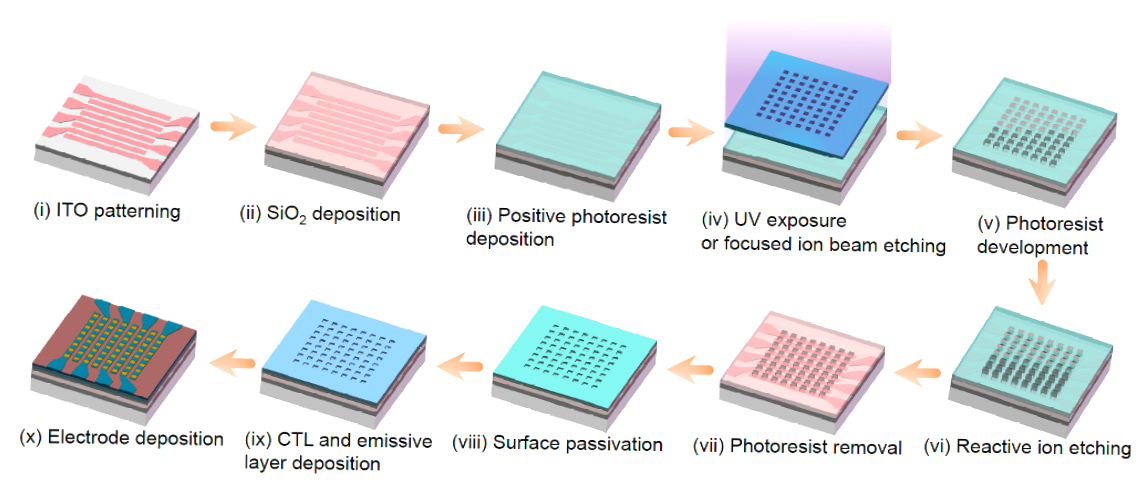 This setup packs 127,000 pixels per inch—240 times denser than your iPhone’s screen. You’d need an electron microscope to see individual pixels. Yet somehow, they’re bright enough to potentially replace stadium-sized billboards with postage stamp-sized panels.
Prototypes That Defy Expectations
Teaming up with Hangzhou’s LinkZill, known for thin-film transistors (TFTs), the scientists built an active-matrix micro-PeLED display. Their demo? A working screen showing video clips. But there’s a twist. While the 90nm LEDs set density records, a separate prototype with 100-micrometer pixels (human hair width) proves the tech scales. It’s like having a Formula 1 engine that also powers lawnmowers.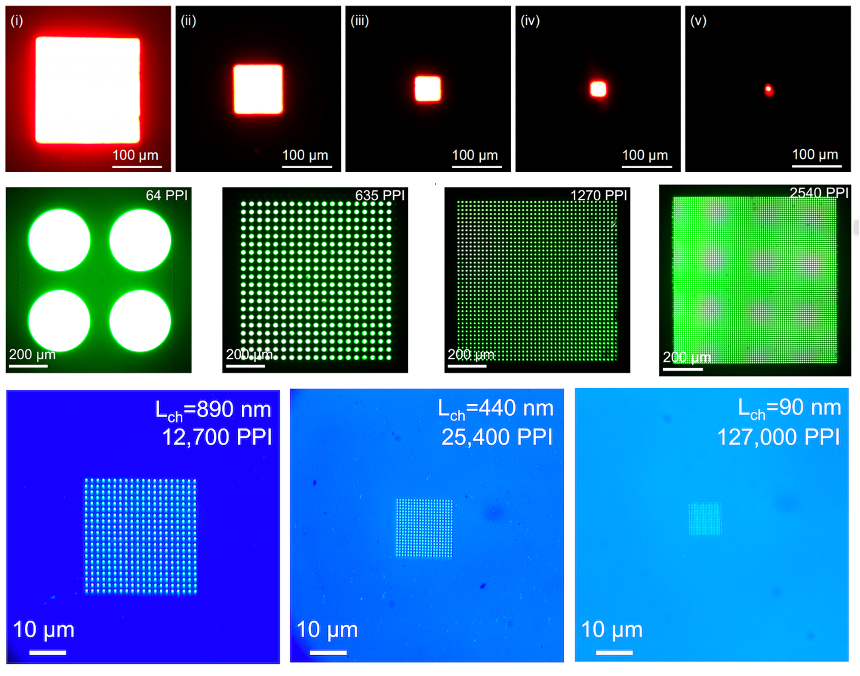
Why Your Next AR Glasses Might Cost Less
Today’s augmented reality headsets struggle with the “screen door effect”—visible gaps between pixels. At 127,000 PPI, these nano-LEDs could erase that flaw. But the applications go further:- Holography: Tiny pixels enable lifelike 3D projections
- Photolithography: Cheaper chip manufacturing without EUV machines
- Neuroscience: Ultra-fine optogenetic tools for brain mapping
 There’s a catch, though. Current prototypes only emit blue light. Creating red and green perovskite LEDs that match performance remains a hurdle. Plus, the human eye can’t discern details beyond ~600 PPI at 12 inches. So why push further? Because photolithography and VR retinal projection don’t care about biological limits.
The Road Ahead: Color, Cost, and Commercialization
Zhejiang’s team isn’t resting. Next-gen goals include full-color displays and tackling perovskite’s historical weakness—durability. If they succeed, micro-LED makers face disruption. After all, perovskite costs less than gallium nitride and doesn’t require sapphire substrates. But as Baodan Zhao notes, “It’s not about beating existing tech. We’re creating tools for applications that don’t even exist yet.” For now, the tiny LEDs shine brightest in monochrome. Yet they’ve already lit a path toward displays that aren’t just smaller, but smarter. Because sometimes, thinking inside the box—a nanometer-sized box—is how real innovation happens. Sources: TechXplore, ZHEJIANG University


Leave a Reply