


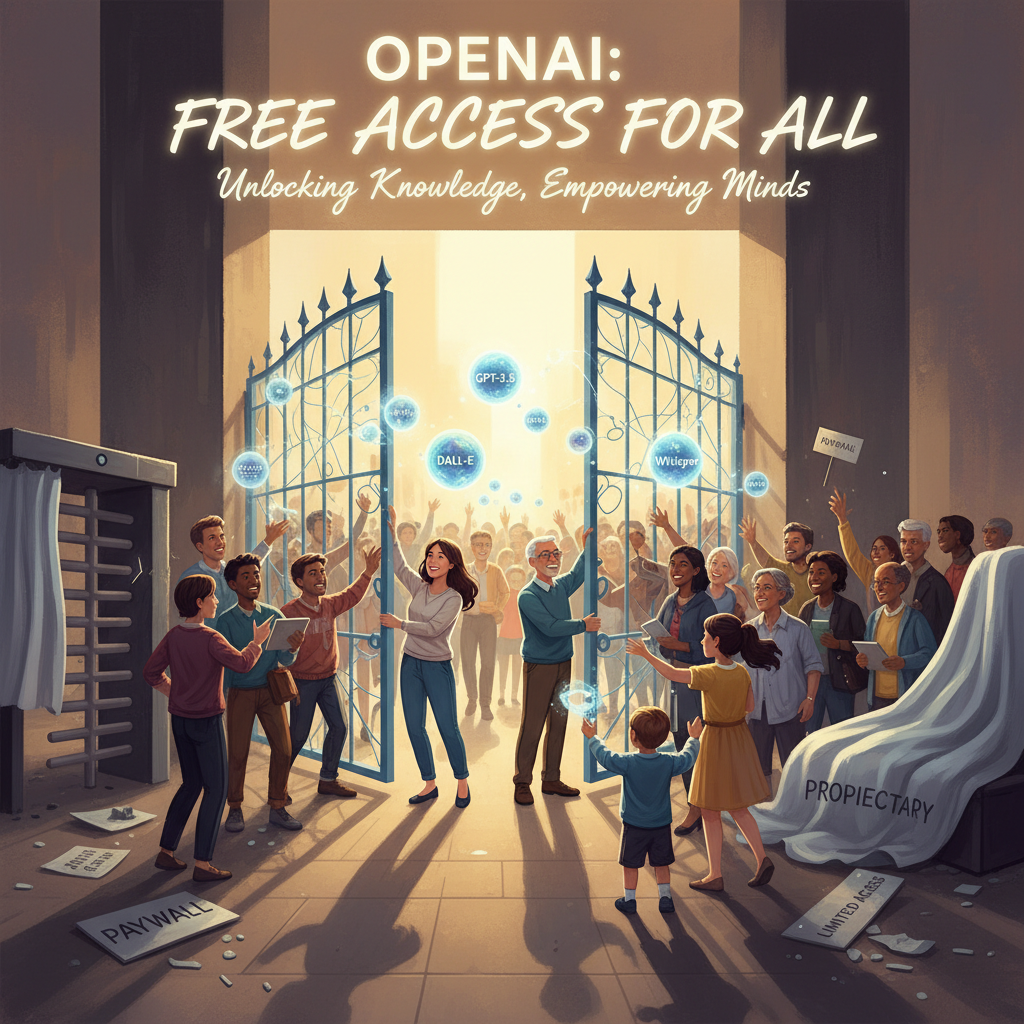
OpenAI free access and Google’s complimentary service tiers are shrinking rapidly, as both tech giants quietly roll back generous usage limits for their flagship generative tools. New reports confirm that OpenAI has capped Sora 2 video generation to a mere handful of daily attempts, while Google has tightened the leash on Gemini 3 Pro and Nano Banana Pro availability for non-paying users. This coordinated shift signals the end of the “unlimited trial” era in artificial intelligence, pushing casual users toward paid subscriptions to maintain functional workflows.
Sora 2 capped at six daily generations
The most significant hit to creative users comes from OpenAI. The company’s advanced video generation model, Sora 2, has been restricted to just six video generations per day for free accounts. This is a massive constraint for a tool designed for iteration and refinement, where getting the perfect clip often requires dozens of prompts and tweaks. As reported by TechRadar, this limitation fundamentally changes how the tool can be used without a subscription.
Previously, the allure of OpenAI user limits was their flexibility, allowing users to stress-test the model’s physics engine and lighting capabilities. With a hard cap of six generations, the free tier effectively becomes a “demo mode” rather than a utility for content creation. This restriction likely stems from the immense computational cost of rendering high-fidelity video compared to text or static images. Video synthesis requires sustained GPU power, and by throttling free access, OpenAI preserves bandwidth for its paying ChatGPT Plus and Enterprise customers while managing skyrocketing inference costs.
Google AI changes hit Gemini 3 Pro and image tools
Google is simultaneously scaling back its own offerings. The search giant has removed its previous assurance regarding Gemini 3 Pro, which initially promised a baseline of five free prompts per day. According to recent updates, that specific guarantee has vanished from the terms of service, leaving free users with uncertain access that fluctuates based on server load. This unpredictability makes it difficult to rely on Gemini 3 Pro for consistent daily tasks without upgrading to the Gemini Advanced tier.
The restrictions extend to visual media as well. Nano Banana Pro, Google’s efficient model designed for lighter workloads and image manipulation, now enforces a strict limit on visual creativity. Users are now fixed at just two image generations or edits per day. For a tool marketed on its versatility and speed, a two-image cap renders it nearly obsolete for anyone but the most casual experimenters. These Google AI changes suggest that the company is moving to ring-fence its most capable AI models behind a paywall, reserving the free tier strictly for text-based queries and lower-power tasks.
Rising costs drive AI access restrictions
These simultaneous moves highlight a broader industry trend regarding AI access restrictions. The economics of running large language models (LLMs) and video synthesis engines are colliding with the reality of user growth. Inference—the process of the AI actually generating the answer or video—is incredibly expensive. As demand surges, companies can no longer subsidize massive compute loads for non-paying users. The pivot is clear: convert the massive user base acquired during the “free research preview” phase into recurring revenue.
The crackdown on free usage also serves a technical purpose. By limiting the volume of requests from free accounts, providers can reduce latency and improve reliability for premium subscribers. It is a resource management strategy as much as a business one. We are likely seeing the establishment of a standard industry practice where “state-of-the-art” capabilities are strictly paid features, while free access is relegated to older, smaller, or strictly text-based legacy models. If you rely on next-generation tools like Sora 2 or Gemini 3 Pro, the message is clear: the free lunch is over.